2D game techniques
One technique per page, like torchlight that stops at walls or a jump that forgives a late press. Each has tested code, the numbers that matter and a prompt you can copy into your coding agent.
Terrain and nature
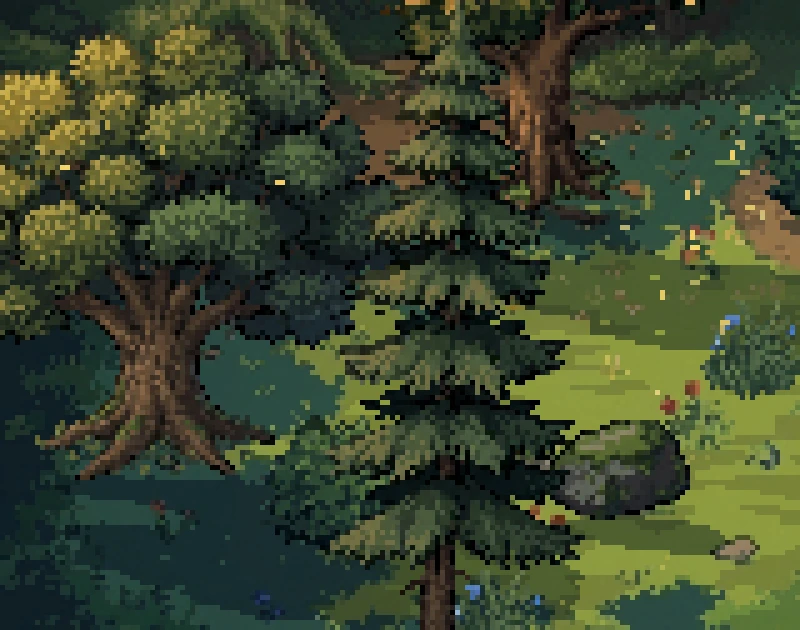 How to make pixel art trees move in the windWind for pixel art trees without animation frames. Keep the trunk still, move leaf clumps one pixel at a time in a traveling wave, add gusts. Tested Python and Godot code.
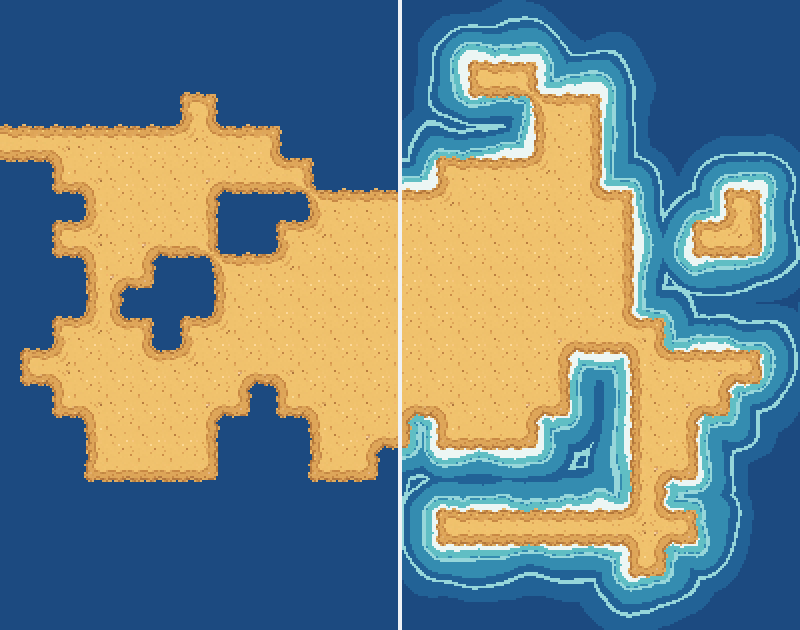 2D water shorelines with a distance fieldShallows, foam and waves that follow every bay of a 2D tile coastline, from one distance map baked at load. With a bake script, a Godot shader and pitfalls.
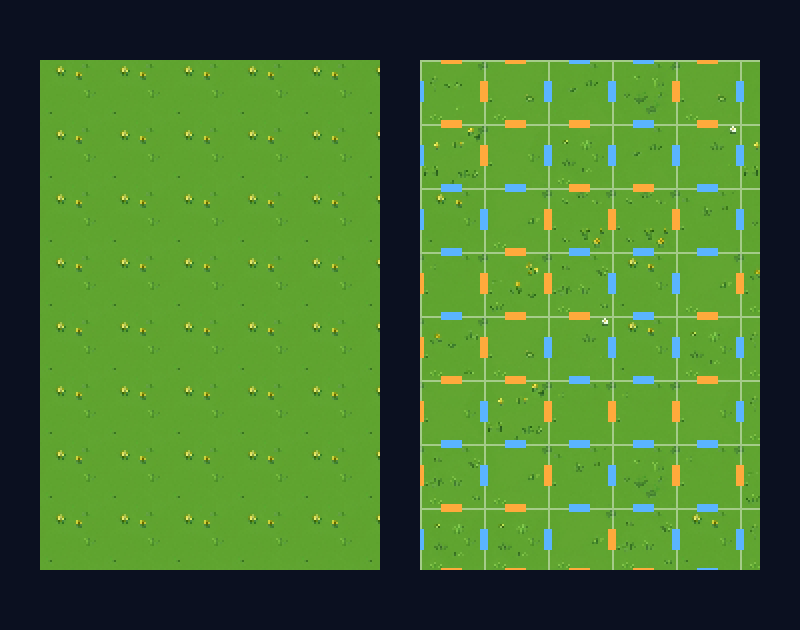 Wang tiles for pixel art, explainedOne repeated tile always shows a grid. Wang tiles fix it with 16 tiles whose edges match. How they work, how to place them, and how to cut them from a texture.
Light and depth
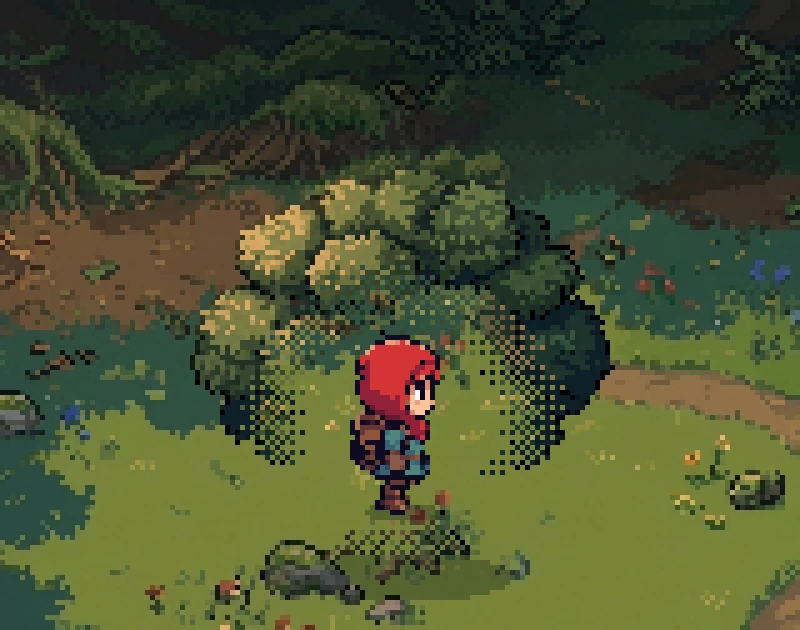 4 ways to keep the player visible behind trees and walls in a 2D gameFade, dither, cutout and silhouette, the four standard ways to show a character who walks behind a tree or a wall. What each one does to pixel art, when to switch it on, the numbers, a tested Godot script with its shader, and the pitfalls.
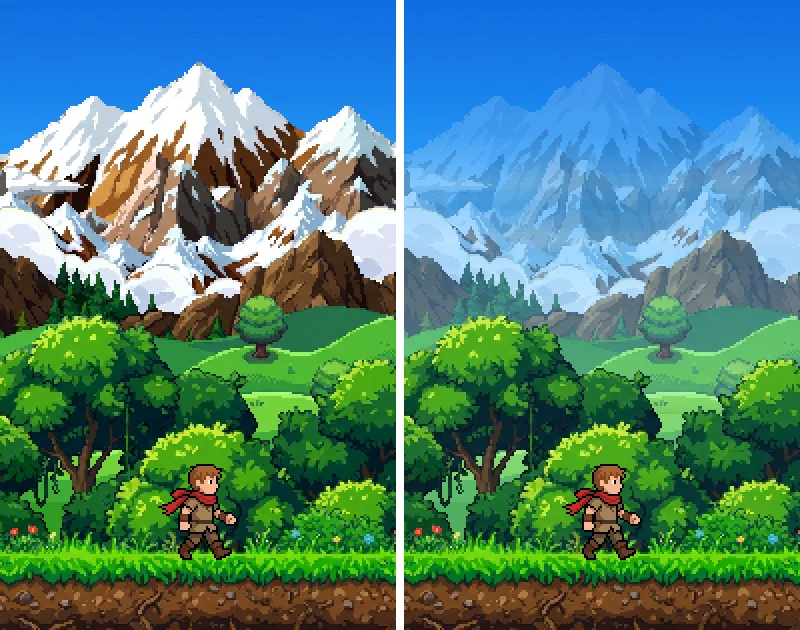 Atmospheric perspective for 2D parallax backgroundsWhy stacked parallax layers look flat, and how to fix it by blending each layer toward the sky's color by distance. With the amount for each layer, a tested Godot shader and the pitfalls.
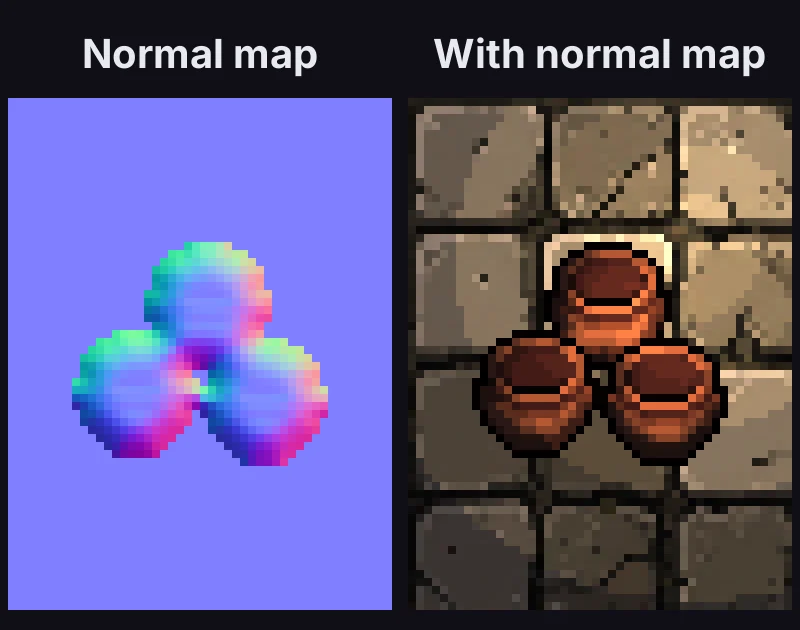 Normal maps for pixel art from the sprite's outlineHow to make a normal map for any pixel art sprite from its outline, with no drawing. The steps, Python code, a tested Godot shader that keeps the light in pixel art steps, floor tiles and the pitfalls.
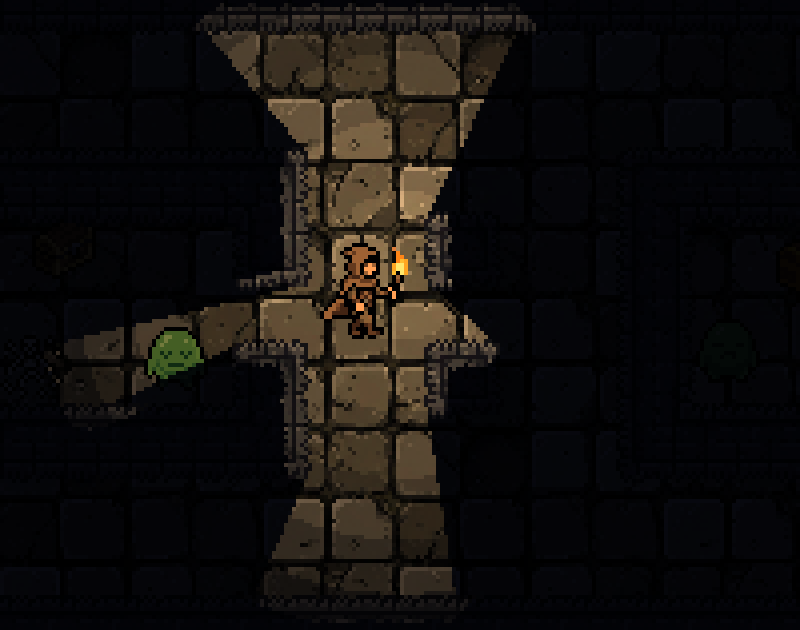 2D shadowcasting for torchlight, fog of war and line of sightTorchlight that stops at walls, fog of war and enemy line of sight, all from one roguelike algorithm. With tested Python and Godot code and the pitfalls.
Game feel and UI
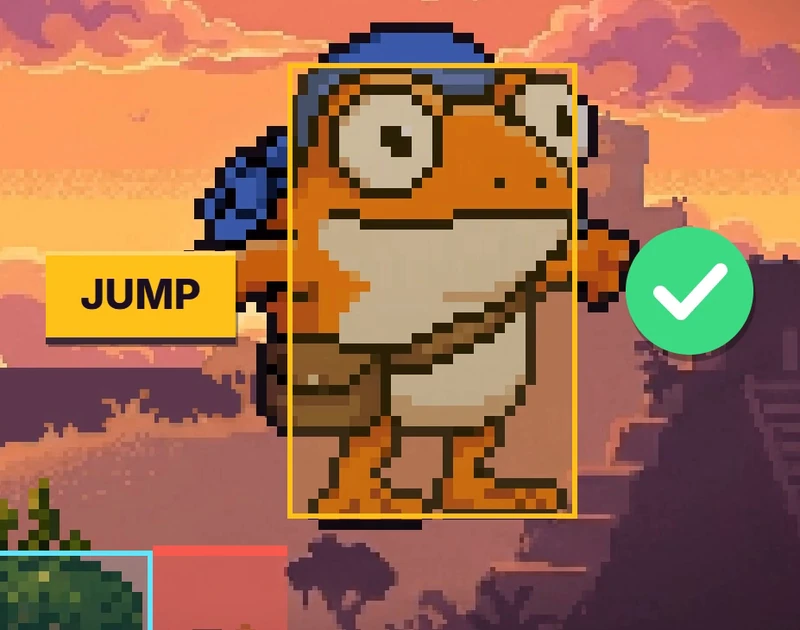 Coyote time, jump buffering and corner correction for 2D platformersThree small bits of forgiveness that make a platformer feel fair. A late jump off a ledge, an early jump before landing and a nudge past a corner, with the numbers, tested Godot code and the pitfalls.
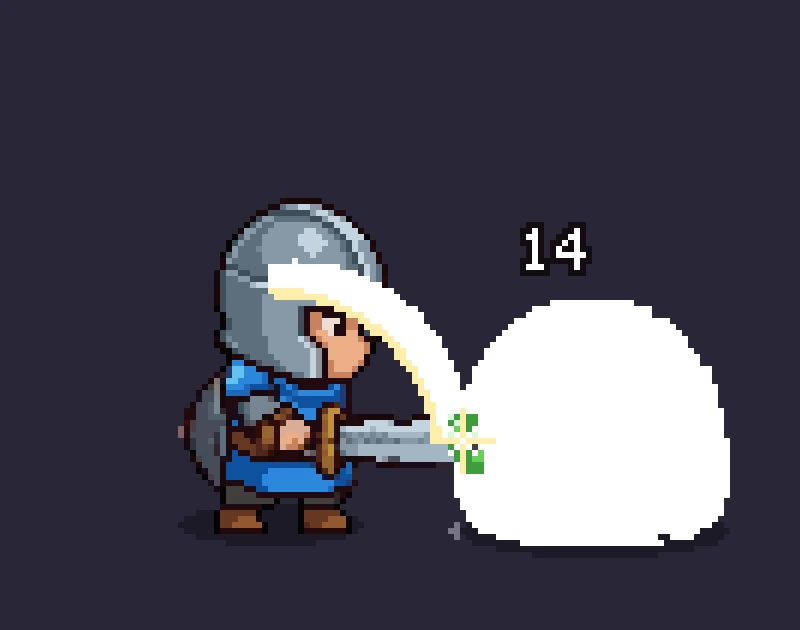 Hit stop, hit flash, knockback and 5 more ways to make hits feel heavyEight small effects that make a sword hit feel heavy in a 2D game, from hit stop to damage numbers, with the frame counts and pixel sizes for each, a tested Godot script and the pitfalls.
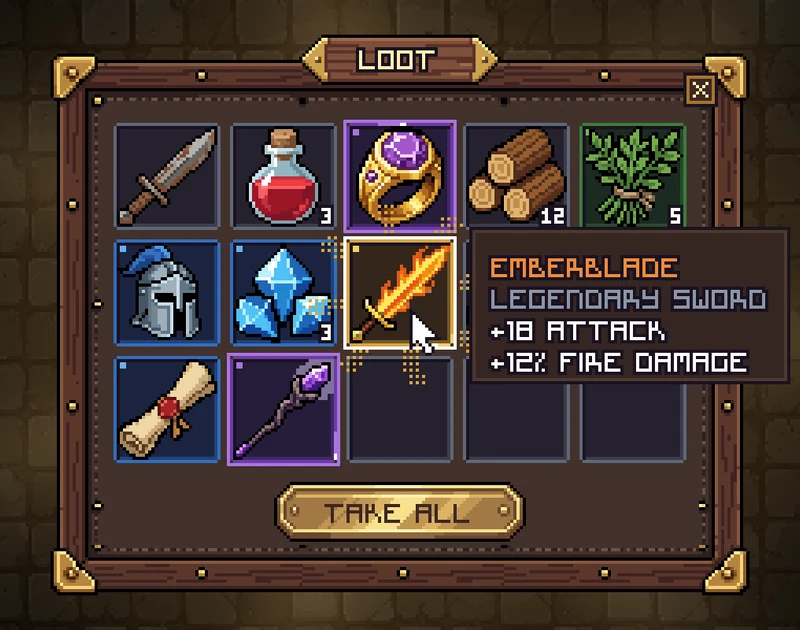 How to make a pixel art inventory UI with 9-slice and rarity effectsHow a small pixel art loot window was made. 20 generated pieces at exact sizes, a 9-sliced frame, rarity slots drawn in code, a staggered reveal with an effect per rarity, a glow behind the window and cartoony sound effects. With the prompts and Python code.
Pixel rendering
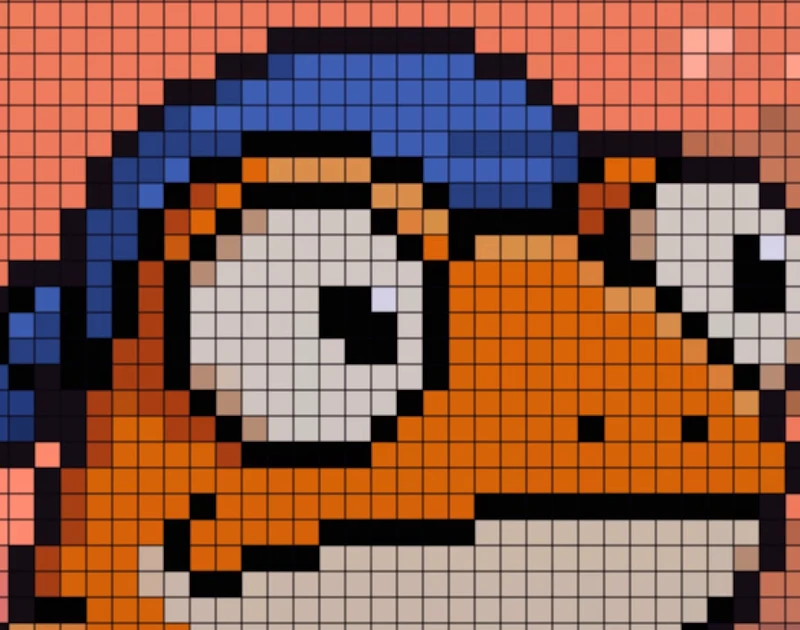 How to set up a pixel art game so it renders pixel perfectWhy pixel art looks blurry, lumpy or pasted together in a game, and the eight rules that fix it. With the Godot and Unity settings, a tested script that audits a scene and the pitfalls.
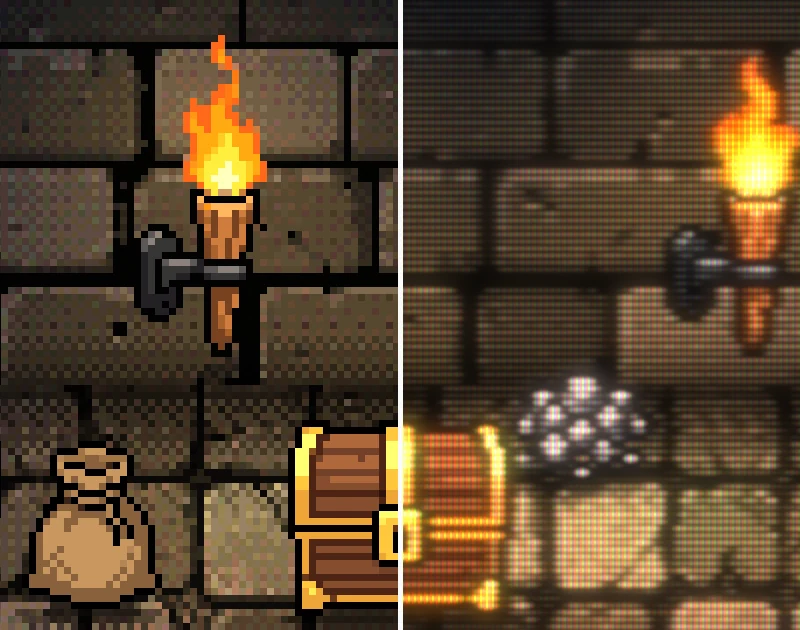 How to make pixel art look like it's on a CRTWhat an old CRT TV does to pixel art, why 90s console artists dithered in checkerboards, and a one-pass CRT shader for WebGL and Godot, with notes for other engines.